

Trail Kitchen · A RidgeSong field guide
A Backpacking Kitchen for Two: What to Share and What to Carry
Sharing a kitchen works best when both people agree on the meal routine. Separate shared preparation from personal eating and drinking, then check portions.
Before you begin
- Agree on the meal sequence before dividing equipment.
- Separate shared preparation from personal eating and drinking.
- Check real portions and decide who carries each piece.
In this guide 0% read
Share the tasks that work well together
A backpacking kitchen for two does not have to be two complete solo kits. You can share suitable preparation equipment while keeping personal eating and drinking vessels. The useful division depends on your meals, when you want to eat and whether you will stay together for those stops.
Begin by choosing one breakfast, one evening meal and your usual drinks. Talk through the sequence with your companion before choosing cookware. Shared equipment works better when both people know what it is expected to do and who will carry it.
Agree on a meal rhythm
Some pairs are happy preparing drinks and meals in turns. Others want coffee available while food is being prepared, or want both meals ready together. Neither preference is wrong, but they lead to different arrangements.
Draw a simple sequence for a typical morning: prepare water, make drinks, prepare breakfast, serve and clean up. Mark every point where two tasks need the same vessel. You can accept the wait, change the order or add a separate suitable container. This makes the reason for each extra piece visible.
If you plan to separate during meal stops, discuss that before relying on a shared kitchen. Equipment carried by one person is not available to the other when your plans diverge.

Separate shared preparation from personal use
Suitable cooking equipment and preparation tools can serve the pair. Drinking vessels are often more convenient as personal items, particularly when you both want a drink at once. Eating vessels depend on how you serve the meal and whether you are happy sharing a container.
| Task | Possible shared item | Personal choice to discuss |
|---|---|---|
| Prepare a meal or hot water | Suitable cooking vessel and heat source | Whether the batch and timing meet both people's needs |
| Drink tea or coffee | Water preparation or brewing equipment | A drinking vessel for each person |
| Eat | Preparation vessel and serving tool | Individual bowls, eating from the pot, or another planned arrangement |
| Clean and repack | Appropriate cleaning and waste-carrying supplies | Who looks after each person's utensils and cup |
Use the table as a conversation starter. It does not mean every trip needs every item in each row.
Check the meal, not just the capacity label
Choose real portions and follow the food instructions when planning preparation. Check the cookware's intended working capacity and whether your meal needs room for mixing or serving. A vessel's nominal capacity alone cannot establish that it cooks a complete meal for two.

Read the video captions
A serving cup sits beside the cooking pot. Coffee is poured from a glass server. Other cups remain on the table.
At home, walk through the intended process with the actual equipment. Note whether both portions fit the permitted use, whether a second batch is needed and where the first portion goes while the next task happens. For a meal prepared outside the pot, the pot's job may simply be supplying the required water.
Keep meal water and drinks as separate entries in the plan. Two small cups for sharing a taste are a different choice from two personal vessels for a full drink.
Choose modules for the routine you planned
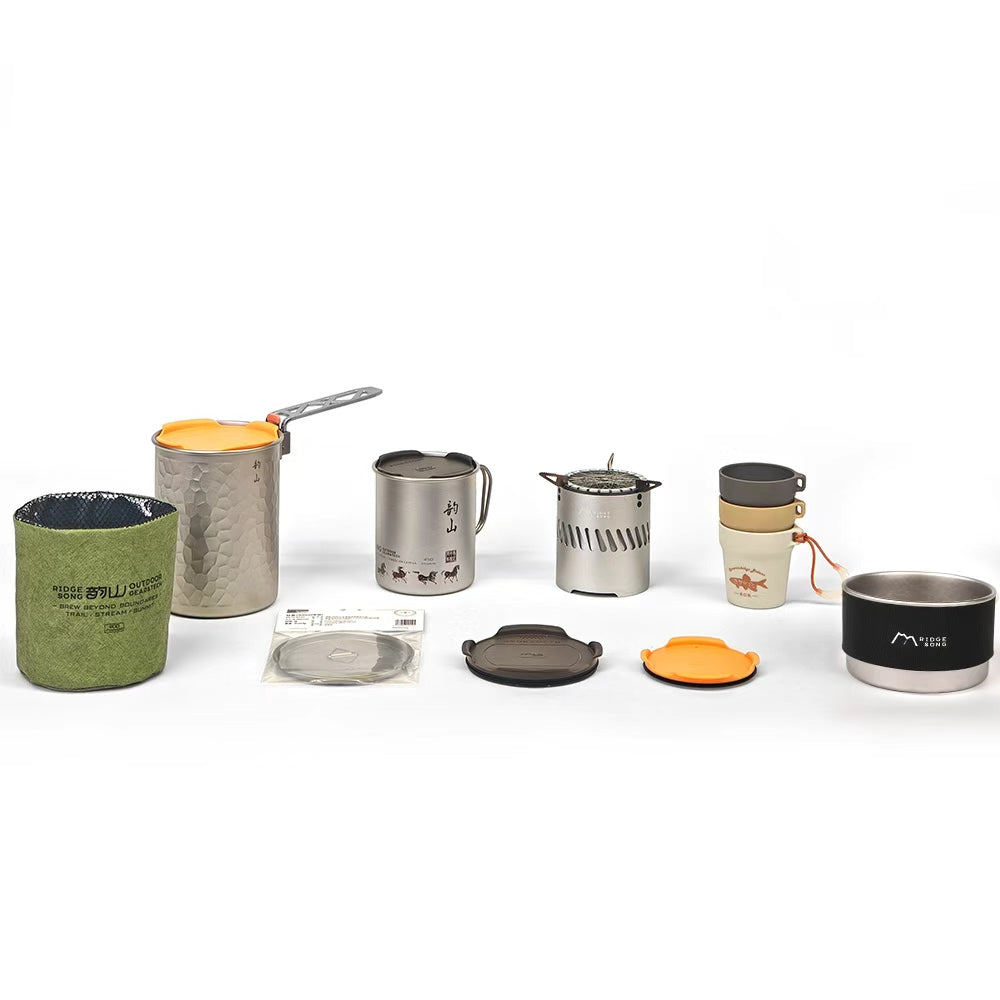
The RidgeSong Mega Set combines a trekking pot, tea mug, stove, bowl and sharing tumblers. That range offers ways to divide preparation, eating and drinks. It does not make every combination a complete two-person kitchen, and you do not have to carry every module.
If you both want individual drinking vessels, compare the number and type included in your chosen arrangement. The Tea-Infused Ti Mug 450 is one personal brewing and drinking option. The ALPINE Ti-Bowl is an eating-vessel option with handled and handleless versions.
Pick those pieces for the jobs you identified. Keep any suitable items you already own rather than replacing them just to make the kit look uniform.

Divide the complete carried load
Make one shared list instead of two lists that partly overlap. Include lids, handles, storage bags, utensils and the supplies required by your chosen food and drink routine. Keep equipment, food, water and fuel totals separate so both people can understand what is being counted.
Allocate items by agreement and check them against each person's other equipment. Nesting several pieces together may make it convenient for one person to carry that group. Another shared item can travel with the other person. There is no need to force a perfectly equal kitchen split if the overall loads and access work well for both of you.
Before leaving, each person should be able to point to the shared items in the packing list and know which bag contains them.
Rehearse the handover as well as the meal
Set out the kitchen together. Move through the planned meal and decide who prepares, who serves and where used pieces go. Then pack everything back into the two bags. Count the shared parts once and the personal pieces for each person.
That short rehearsal turns a collection of gear into an agreed routine. Review the Mega Set contents and current options, then build the shared setup around your actual portions, drinks and preferred pace.
Equipment in this guide
A closer look at the pieces.


Keep your plans moving
Where to go from here.

Choose personal bowls and mugs
Give each person the eating and drinking vessels their routine needs.

Build a Modular Backpacking Cook Kit
Choose your cooking pieces around the jobs they need to do. Explore three starting setups, count every carried component and use a checklist to build your own kit.