

Gear Guides · A RidgeSong field guide
Do You Need a Backpacking Table? Tasks, Trade-Offs and Packing
A small table can organize a busy meal stop. It also adds another item to carry. Make the choice by checking your routine, workspace and complete load.
Before you begin
- Give the table a task you expect to repeat.
- Check workspace, packed shape and the complete carrying load.
- Bring it when the layout improves your actual routine.
In this guide 0% read
Give the table a specific job
You do not need a backpacking table simply because you carry a camp kitchen. It earns its place when a defined workspace makes a regular part of your meal routine easier: arranging drink gear, keeping small utensils together or preparing food on a suitable board. If you rarely need those tasks, leaving it at home is a reasonable choice.
Start by naming the problem you want to solve. “I need somewhere for the lid and spoon” is a useful reason to compare a table. “My setup should look more complete” tells you much less about whether you will enjoy carrying it.
Picture one stop, with and without the table
Run through a normal lunch or coffee break. List what you put down, what you pick up repeatedly and what needs its own surface. A drink prepared from a ready-to-use container may involve little equipment. A stop with several cups, a brewer, utensils and food preparation can involve more arranging.
Now consider your expected surroundings. An established site with an appropriate table already available changes the decision. On a route without one, your own small platform may be useful, but it still needs suitable support. A table does not remove the need to choose a stable setup location.

Focus on the tasks you repeat. An accessory that helps every morning has a different value from one that solves a situation you only imagine encountering.
Check the workspace before the headline weight
A compact tabletop has a finite usable area. Check its dimensions and the location of any cutouts, then compare them with the items you want to arrange. A surface that holds one vessel comfortably may not hold your entire meal setup at once.
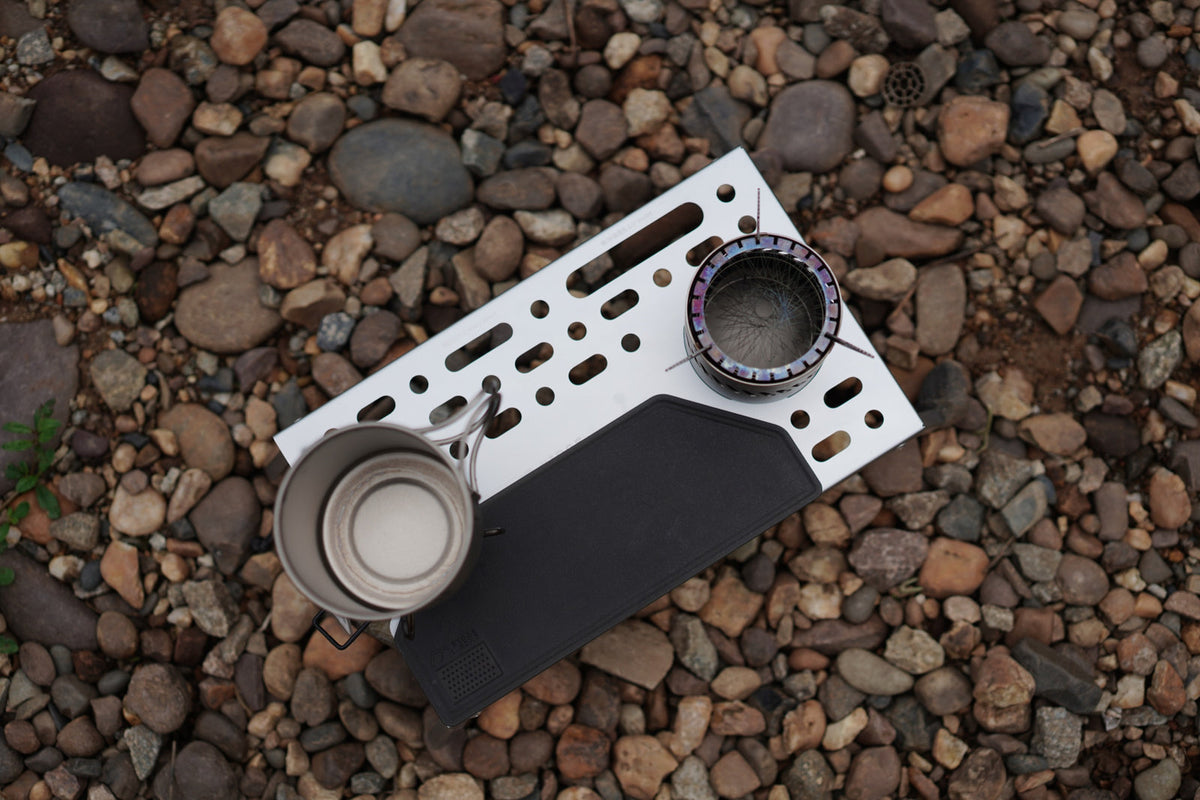
The Wild Cook Multi-function Trekking Table lists a 29 × 18 cm working surface. You can mark that outline on paper at home and place your cool, unlit equipment around it to visualize the space. That exercise helps with layout; it does not prove that a burner fits securely or establish heat compatibility.
Leave yourself room to reach the things you use. A smaller, deliberate arrangement can be more practical than filling every opening and covering the entire top.
Count the whole item you are bringing
Weight comparisons are clearer when they include the accessories you will actually carry. Wild Cook lists the table at 179 g and its detachable prep board at approximately 48 g. The package also includes a storage bag. Keep those entries separate when planning your load instead of treating the table-only figure as the weight of every packed arrangement.

Read the video captions
A coffee dripper is set on the table. Coffee equipment is arranged beside the pot. Water is poured into the dripper. Cups and the pot stay within reach on the tabletop.
Check the folded shape against your bag, too. Decide where it will go and whether taking it out requires unpacking other equipment. If the table is awkward to access, you may leave it packed during the very stops it was meant to improve.
Weigh your finished combination with its storage accessories. That gives you an honest comparison with the same kitchen packed without a table.
Understand the fittings and their limits
Wild Cook uses an aluminum-alloy tabletop and folding stainless-steel legs. Its layout includes a dedicated Blaze stove position, openings for selected lids and utensils, and a detachable prep board. Those features make it worth examining if you already use the matching equipment.
Compare the exact versions and shapes shown on the product pages. A cutout is not proof that any burner, canister or lid with a similar appearance is compatible. If you plan to place cooking equipment on the table, follow the current instructions for both products and confirm the intended arrangement before use.
The table is not a seat or step. A laboratory static-load figure does not establish stability on every surface or permission to use the top in every way. Choose a suitable location and the use the product is designed for.

Decide when to bring it and when to skip it
| Your trip | Reason to consider a table | Reason to leave it |
|---|---|---|
| A brief drink stop | You repeatedly need a place for several small items | Your drink setup already works with very little unpacking |
| A meal with preparation | A defined workspace and suitable board have a clear job | Your meal requires no separate preparation surface |
| A shared kitchen | You want an agreed place for shared tools and lids | An appropriate table is already available at the planned site |
| A trip with a strict carrying budget | You value its daily use enough to include it | Its benefit is occasional and other equipment matters more |
Rehearse the layout once
With everything cool and unlit, arrange the items you expect to use, move through the meal routine and pack them away again. Check access, the intended placement of each piece and the complete carrying load.
Choose the table if that exercise solves a recurring inconvenience you care about. Skip it when your existing routine already works well. Review the Wild Cook dimensions and included parts before deciding what belongs in your pack.
Equipment in this guide
A closer look at the pieces.

Keep your plans moving
Where to go from here.

Build the kitchen around your meal routine
Choose the cooking and serving pieces that will use the workspace.

A Backpacking Kitchen for Two
Sharing a kitchen works best when both people agree on the meal routine. Separate shared preparation from personal eating and drinking, then check portions.