

Gear Guides · A RidgeSong field guide
Squeeze or Gravity? Two Ways to Filter with DualFlow
A quick refill and a relaxed camp stop ask different things of your water kit. Choose how to move water through DualFlow around the stop you have planned.
Before you begin
- DualFlow supports squeeze and gravity filtration.
- The container matters as much as the filtering mode.
- Actual flow depends on water quality, pressure and filter condition.
In this guide 0% read
At a short trail stop, you may want to fill a bottle and keep moving. At camp, you may have time to hang a water bag and let it filter while you organise your cooking gear nearby. Those are different routines, even when they use the same filter.
DualFlow supports squeeze and gravity filtration. The choice is about how you move water through the filter and how that task fits into the rest of the stop.
Squeeze filtration: put the refill in your hands
In a squeeze setup, gentle pressure on a compatible source container moves water through DualFlow. It suits a stop where you want to handle the refill directly, with a separate receiving vessel ready for the filtered water.
The practical advantage is control over the task. You can position the outlet over the receiving vessel and attend to the flow while filling it. The trade-off is that your hands are occupied, and the source container needs to be comfortable to squeeze in that configuration.
A compact squeeze arrangement can be convenient when there is little room to lay out equipment. Think through where the receiving vessel will sit: a refill into a bottle asks for a different hand position from a pour into a cup. Choose a position you can control without spilling untreated water into the receiving vessel.

Gravity filtration: give the refill a place at camp
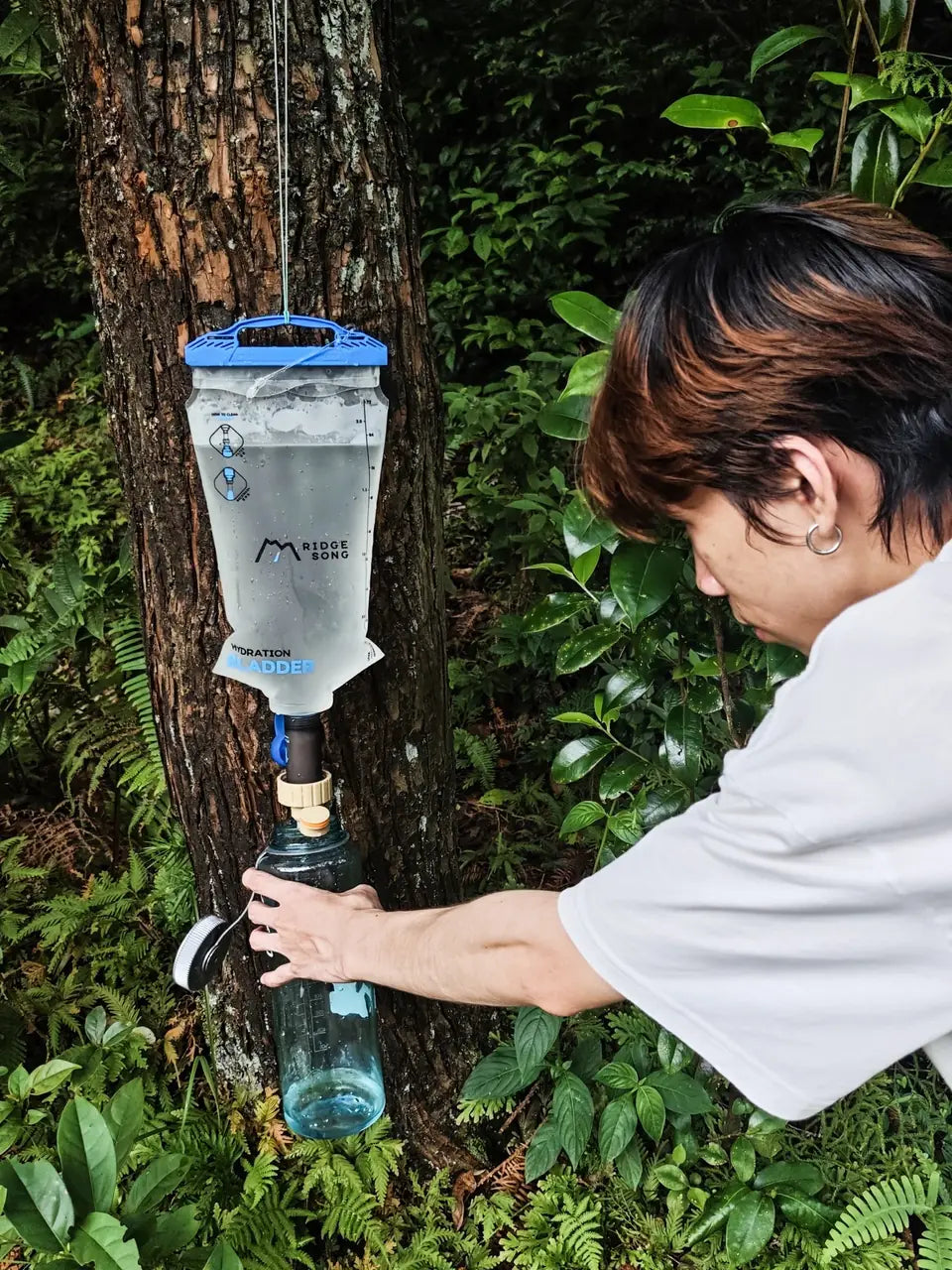
A gravity setup uses the height of a compatible hanging water bag to move water through the filter. It can suit a longer stop where there is an appropriate way to support the source container and keep the receiving vessel below the outlet.
The bag and hanging arrangement need to be intended for that use. Check the assembled system for leaks and keep it where you can monitor the refill. The advantage is less sustained hand squeezing; the trade-off is finding a suitable setup position and allowing the refill to fit the pace of camp.
For a shared stop, decide where the water will go before you begin. Filling a planned receiving container is easier to organise than repeatedly moving different cups under an awkwardly placed outlet.
Choose around the stop
| Your stop | A useful starting point | The practical trade-off |
|---|---|---|
| A short refill with one receiving bottle | Squeeze | You handle the refill throughout |
| A longer camp stop with a suitable hanging location | Gravity | The bag, outlet and receiving vessel need a stable arrangement |
| A route with both kinds of stop | Either mode, with compatible equipment | Check all carried pieces and rehearse both setups |
The container matters as much as the filtering mode. DualFlow has compatible 28 mm and 42 mm inlet options; check the exact thread and seal rather than selecting only by the words “bottle” or “bag.” A container that connects correctly must also suit the way you intend to use it.

What the flow rating tells you
DualFlow is rated at up to 2 L/min. Actual flow depends on water quality, pressure and filter condition. Hand pressure in a squeeze setup and the height of water in a gravity setup are not identical, so the rating should not be read as a fixed refill time for either method.
If flow becomes slower, remember the maintenance routine instead of treating more squeezing as the only answer. RidgeSong recommends backflushing with clean water after every 5 L, or when flow slows. DualFlow’s built-in 28 mm backwash connection allows this without a separate connection adapter.
The design story shows the filtering and backwashing paths separately, including removal of the drinking-outlet assembly for backwashing.
Keep the water path clear
Whichever mode you choose, keep the source-water side distinct from the drinking-water side. Arrange the receiving vessel so untreated water cannot spill into it, and follow the product’s care and water-source instructions.
DualFlow is intended for the clearest flowing freshwater available. It is not designed to remove viruses, salt or all dissolved chemical contaminants. Neither gravity nor extra squeezing expands those treatment capabilities; choose an appropriate treatment plan for your route and water source.
Practise the stop you expect to make
Set out the source container, filter and receiving vessel at home. Try the arrangement with clean drinking water and notice which parts need a hand, a support or more space. If you intend to use both modes, rehearse both.
You can then choose a refill routine for the trip instead of improvising one at the water source. Explore the DualFlow filter to see its compatible connections and the equipment you want to build around it.
See the detail
Equipment in this guide
